

Heuritech
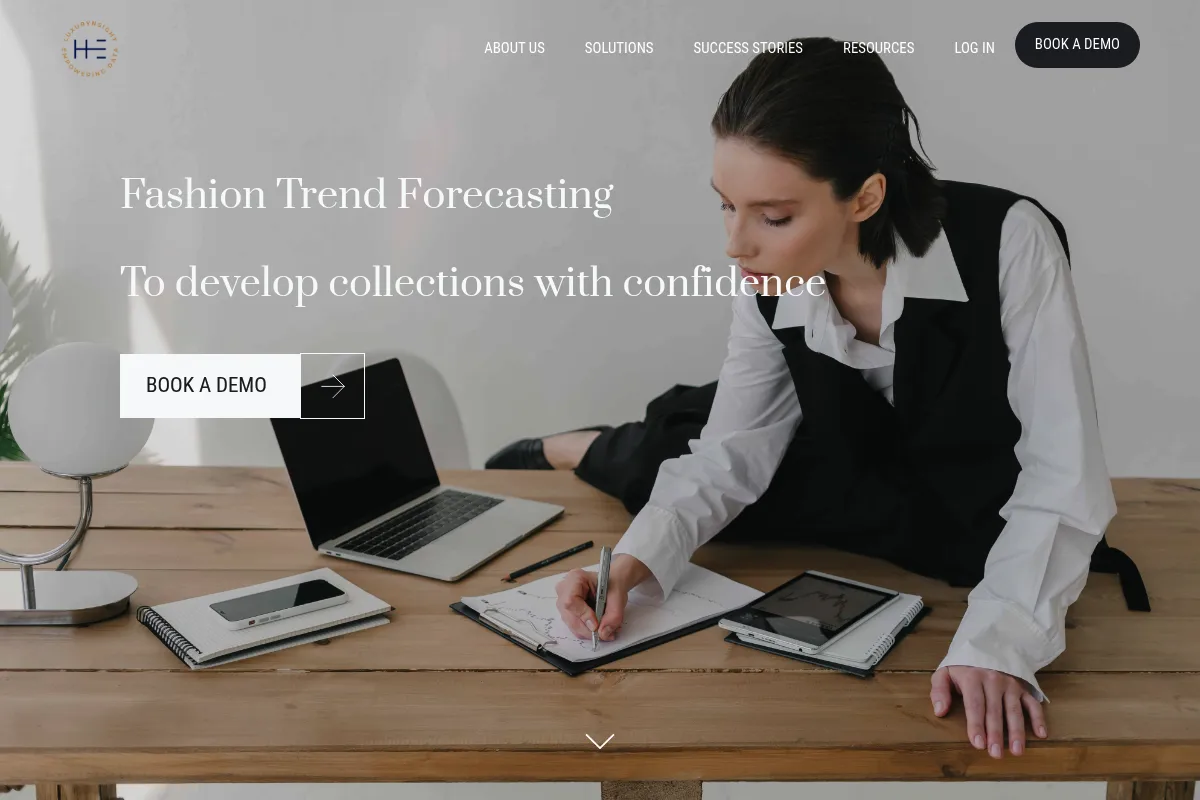
A quantitative trend forecasting tool that uses computer vision to turn social media imagery into actionable inventory and design data for fashion brands.
Excellent for large retailers needing to justify production volumes with data, weaker for small labels driven by pure creative intuition.
Analysis based on product data, pricing structure, traffic signals, and public user sentiment.
Who Should Use Heuritech?
Typical users
Merchandisers, trend researchers, and product developers at mid-to-large fashion houses and mass-market retailers.
Maturity fit
advanced
Choose this if…
- Your priority is reducing overstock by timing trend exits accurately
- You need to quantify visual trends (e.g., 'polka dots' vs 'stripes') with hard percentages
- You want to benchmark your brand's trend adoption against specific competitors
- You have the supply chain agility to act on 6-12 month forecasts
Skip this if…
- You are a small boutique with low SKU counts and limited budget
- Your design process is purely artistic and resistant to data-driven interference
- You need real-time POS data integration rather than social media signals
- Your lead times exceed 12 months, making social-first trends less relevant
About Heuritech
Heuritech is a market intelligence platform designed specifically for the fashion industry. It applies proprietary computer vision to millions of daily social media posts to identify colors, textures, and silhouettes before they hit the mass market.
What it actually does
The platform analyzes public social media images to track the lifecycle of over 2,000 fashion attributes. It provides brands with forecasts on trend growth, magnitude, and consumer segment adoption to align product development with actual demand.
What makes it different
Unlike traditional trend services that rely on editorial curation and 'gut feeling,' Heuritech is purely quantitative. It treats social media as a global focus group, using AI to detect specific visual details that manual tagging would miss.
Key Features
Trend Forecasting
Predicts whether a specific attribute will grow or decline in the next 12 months.
Image Recognition Engine
Automatically identifies fabrics, prints, and shapes in un-tagged social photos.
Market Share Tracking
Measures your brand's visibility in a specific trend category versus competitors.
Consumer Profiling
Categorizes trend adoption by 'early adopters' versus 'mass market' consumers.
Inventory Optimization
Suggests SKU volume adjustments based on predicted trend magnitude.
Regional Insights
Filters trend data by specific cities or countries to localize collections.
Assortment Gap Analysis
Identifies trends your competitors are capturing that your brand is missing.
Pricing
Enterprise
- Full access to image recognition database
- Competitor benchmarking tools
- Custom trend reports
- Dedicated account manager
- API access options
Pricing checked 4 months ago
Pricing guidance
- Expanding into new product categories (e.g., moving from apparel to accessories)
- Entering new geographic markets like China (Weibo/Little Red Book data)
- Requiring API integration for internal PLM systems
- Seat-based licensing often applies
- Historical data depth may be capped based on the contract tier
- Specific social platforms (like those in China) may require additional modules
Premium enterprise positioning with pricing that reflects the high R&D costs of proprietary computer vision.
Pros & Cons
Strengths
-
Objective validation for creative teams
Provides designers with data to back up their intuition, making it easier to get stakeholder buy-in for specific styles or colors.
-
Granular visual detection
The AI distinguishes between subtle variations like 'mint green' vs 'sage green' or 'puffy sleeves' vs 'bell sleeves' with high accuracy.
-
Waste reduction
By identifying when a trend has peaked, brands can avoid overproducing items that will likely end up in the clearance rack.
-
Early signal detection
Captures trends emerging in 'edgy' consumer segments before they reach mainstream social media or retail shelves.
Weaknesses
-
High cost of entry
Pricing is strictly enterprise-level, putting it out of reach for independent designers and small startups.
Affects: Small brands and solo entrepreneurs
-
Social media bias
The data is heavily skewed toward what is 'Instagrammable,' which may not perfectly reflect the buying habits of older or less digital demographics.
Affects: Brands targeting 50+ demographics
-
Steep learning curve
The dashboard provides a massive amount of data that requires a dedicated analyst or trained merchandiser to interpret correctly.
Affects: Small teams without data analysts
Real User Sentiment
Users generally view Heuritech as a sophisticated tool that brings much-needed rigor to the often-vague world of fashion forecasting.
Users tend to like
- The ability to quantify 'vibe' and 'style'
- Highly accurate image recognition
- Excellent geographic breakdowns
- Helpful customer success team
Users commonly complain about
- Prohibitive cost for smaller companies
- Complexity of the user interface
- Occasional lag in data refreshing
Recurring tradeoffs
- Users trade creative spontaneity for data-backed security, which can sometimes lead to 'safe' but less inspired collections.
Happiest users
Merchandisers at fast-fashion or mid-market retailers who need to manage high-volume inventory risks.
Often frustrated
Creative directors at small, avant-garde labels who find the data-driven approach stifling or irrelevant to their brand DNA.
Use Cases
Merchandising
Determining the exact buy-volume for a new seasonal color based on its growth trajectory.
Design Validation
Checking if a proposed mood board aligns with what 'edgy' influencers are currently wearing.
Competitor Benchmarking
Analyzing if a rival brand is successfully capturing a trend that you have ignored.
Sustainability
Reducing deadstock by identifying 'declining' trends early and cutting production.
Marketing
Identifying the specific visual attributes that are most viral to inform ad creative and influencer selection.
Frequently Asked Questions
How much does Heuritech cost?
Heuritech does not publish prices publicly. It is an enterprise SaaS platform with custom pricing that typically starts in the five-figure range annually, depending on the number of users, categories, and regions tracked.
How does Heuritech compare to WGSN?
WGSN is editorial-led, relying on experts to curate trends, while Heuritech is data-led, using AI to analyze social media images. Many large brands use both: WGSN for inspiration and Heuritech for quantitative validation.
Does Heuritech track TikTok?
Heuritech primarily focuses on Instagram, Weibo, and Little Red Book (for the Chinese market), as these are highly visual. They are continuously expanding their data sources to include more short-form video platforms.
Can it predict trends for small, niche brands?
While it can track 'edgy' segments, the tool is most effective for trends that have enough visual volume on social media to be statistically significant. It is less effective for hyper-niche subcultures with very low post volume.
Does it integrate with my existing software?
Heuritech offers API access for enterprise clients, allowing data to be pulled into Product Lifecycle Management (PLM) or ERP systems to assist in the manufacturing and ordering process.
Is there a free trial?
There is no self-service free trial. Interested brands must book a demo with their sales team to evaluate the platform's relevance to their specific market segment.
Why trust this page?
This evaluation combines product positioning, pricing analysis, traffic and market signals, and public user sentiment into a single decision-support page. Content is generated editorially — not copied from the vendor's website.
Funding & Company
Founded
2013
Stage
Acquired
Total Raised
$5.7M
Latest Round
Series A (Sep 2019)
Notable Investors
Heuritech raised approximately $5.7 million over two publicly disclosed rounds before being acquired by Luxurynsight in late 2024. This funding, led by European VCs Elaia and Serena, supported its growth until its successful exit, indicating a stable operational history.
Market Signals & Traffic
Estimated visits, global rank, geography, traffic sources, monthly visit trends, and organic search keywords (Similarweb)—on a dedicated page built for depth and search.
- Estimated visits
- 48,491
- Global rank
- #722,487
- Snapshot
- Apr 2026
- Traffic trend
- Falling
Estimated monthly visits
Similar Tools
Tolstoy
Video Creation, Marketing Automation, AI Assistant

Interactive video platform for shoppable content and personalized shopping journeys.
BabyLoveGrowth
Content Creation, AI Assistant

An AI-powered platform that automates your entire SEO workflow, from content creation to backlink building.
Ragas
Developer Tools, Research, Automation

Evaluation framework for Retrieval Augmented Generation (RAG) pipelines
OnBrand
Workflow, Design, E-commerce

Product lifecycle management platform for fashion and apparel brands.
Reflexivity
Research, Data Extraction, Productivity

Investment research platform for financial data analysis and document synthesis.
Outrank
Content Creation

An AI-powered platform that automates SEO analysis and content creation to grow organic traffic.