

Phidata
A Python framework for building AI agents that prioritizes SQL-based memory and structured outputs over complex chain abstractions.
Excellent for developers building production-grade RAG agents with PostgreSQL, weaker for those seeking a no-code visual builder.
Analysis based on product data, pricing structure, traffic signals, and public user sentiment.
Who Should Use Phidata?
Typical users
Python developers and AI engineers building autonomous agents or RAG-heavy applications.
Maturity fit
beginner to scaling
Choose this if…
- You want to use PostgreSQL for both application data and vector embeddings
- You prefer a clean, object-oriented Python SDK over complex abstraction layers
- You need a built-in monitoring dashboard without setting up external observability tools
- Your project requires agents to maintain long-term memory in a relational database
Skip this if…
- You require a drag-and-drop visual interface for agent construction
- You are not proficient in Python
- Your team is already standardized on a non-SQL vector database like Pinecone and does not want to manage PgVector
About Phidata
Phidata is an open-source Python framework designed to turn LLMs into specialized Assistants with memory and technical skills. It focuses on using PostgreSQL as a unified backend for both long-term memory and vector storage, reducing infrastructure complexity.
Official profiles
What it actually does
It provides a structured way to define AI agents that can call functions, search the web, and query databases. Developers use the SDK to connect LLMs to tools and knowledge bases, then deploy them as APIs or use the Phidata Cloud for monitoring and interaction.
What makes it different
Unlike frameworks that treat agents as a series of chains, Phidata treats them as Assistants with a persistent state. Its heavy reliance on PostgreSQL and PgVector simplifies the stack by removing the need for a separate standalone vector database.
Key Features
Assistant Class
Centralizes LLM, tools, and memory into a single object
PgVector Integration
Uses a standard SQL database for vector search instead of a specialized service
Toolkits
Pre-built integrations for DuckDuckGo, YFinance, and SQL databases
Structured Outputs
Forces LLMs to return data in specific JSON formats using Pydantic
Phidata Cloud
Provides a web-based UI to interact with and monitor agents in real-time
Storage Classes
Manages session history and user memory across restarts
Pricing
Open Source
- Full Python SDK
- Local execution
- Community Toolkits
- PostgreSQL storage
Cloud Free
- 1 Project
- Basic monitoring
- Agent UI
- Logs for 7 days
Cloud Pro
- Unlimited Projects
- Advanced monitoring
- Team collaboration
- Long-term log retention
Pricing checked 5 months ago
Pricing guidance
- When you need to share agent logs with a team
- When you require a centralized dashboard for multiple production agents
- When you need long-term observability beyond local logs
- The free cloud tier is limited to one project
- Self-hosting the monitoring dashboard is not as straightforward as using the cloud version
Developer-friendly open-source core with a low-cost observability upsell.
Pros & Cons
Strengths
-
Simplified infrastructure stack
By using PostgreSQL for both vectors and memory, developers avoid the complexity of managing multiple database vendors.
-
Developer-centric design
The Python SDK is intuitive for those familiar with object-oriented programming, avoiding the 'black box' feel of more abstract frameworks.
-
Built-in testing UI
The Phidata app allows for immediate interaction with agents, making the debug loop significantly faster than CLI-only tools.
Weaknesses
-
Smaller community ecosystem
Compared to LangChain, there are fewer third-party tutorials and community-contributed tools available.
Affects: Teams looking for off-the-shelf integrations for obscure services
-
Documentation volatility
The framework evolves quickly, which occasionally leads to outdated examples or breaking changes in the documentation.
Affects: Beginners who rely heavily on copy-pasting tutorial code
-
Python-only
There is no official support for JavaScript or TypeScript, limiting its use in frontend-heavy environments.
Affects: Node.js developers and teams
Real User Sentiment
Users generally praise Phidata for its readability and the logical way it handles agent state, though some find the rapid update cycle hard to keep up with.
Users tend to like
- Clean Pythonic syntax
- Integrated PostgreSQL support
- The built-in playground UI
- Ease of setting up RAG
Users commonly complain about
- Documentation can be confusing
- Breaking changes in minor versions
- Limited non-SQL storage options
Recurring tradeoffs
- You trade the massive integration library of LangChain for a more stable and readable codebase.
Happiest users
Backend Python developers building data-heavy agents.
Often frustrated
Developers who want a stable, slow-moving API or those who do not want to use PostgreSQL.
Use Cases
Financial Analysis
Building an agent that queries YFinance and generates PDF reports
Customer Support
Creating a RAG agent that uses company documentation stored in PgVector
Data Extraction
Using structured outputs to turn messy web data into clean JSON
Research Assistant
An agent that searches the web via DuckDuckGo and summarizes findings
Database Interface
Allowing users to query a SQL database using natural language
Frequently Asked Questions
Is Phidata free?
The core Phidata framework is open-source and free to use under the MIT license. You can build and deploy agents locally or on your own servers without paying. They offer a paid Cloud tier starting at $20/month for monitoring and team collaboration features.
How does Phidata compare to LangChain?
Phidata is more opinionated and focused on 'Assistants' with built-in state management, whereas LangChain is a broad collection of tools for any LLM task. Many developers find Phidata's syntax cleaner and easier to debug, especially for RAG applications using PostgreSQL.
Do I need a vector database to use Phidata?
Phidata works best with PostgreSQL and the PgVector extension. While it supports other options, its primary advantage is using a single SQL database for both your application data and your vector embeddings, simplifying your infrastructure.
Does Phidata support multi-agent systems?
Yes, Phidata has built-in support for multi-agent orchestration, allowing you to create a team of assistants where each agent has a specific role and can hand off tasks to others.
Can I use Phidata with local models like Ollama?
Yes, Phidata supports local models via Ollama and other providers. You can configure an Assistant to use a local endpoint instead of OpenAI or Anthropic.
What are the main limitations of Phidata?
The main limitations are its Python-only SDK and a smaller ecosystem of pre-built integrations compared to older frameworks. It also leans heavily into the PostgreSQL ecosystem, which might not suit teams committed to other database technologies.
Why trust this page?
This evaluation combines product positioning, pricing analysis, traffic and market signals, and public user sentiment into a single decision-support page. Content is generated editorially — not copied from the vendor's website.
Funding & Company
Founded
2023
Stage
Series a
Total Raised
$5.4M
Latest Round
Series A (Sep 2024)
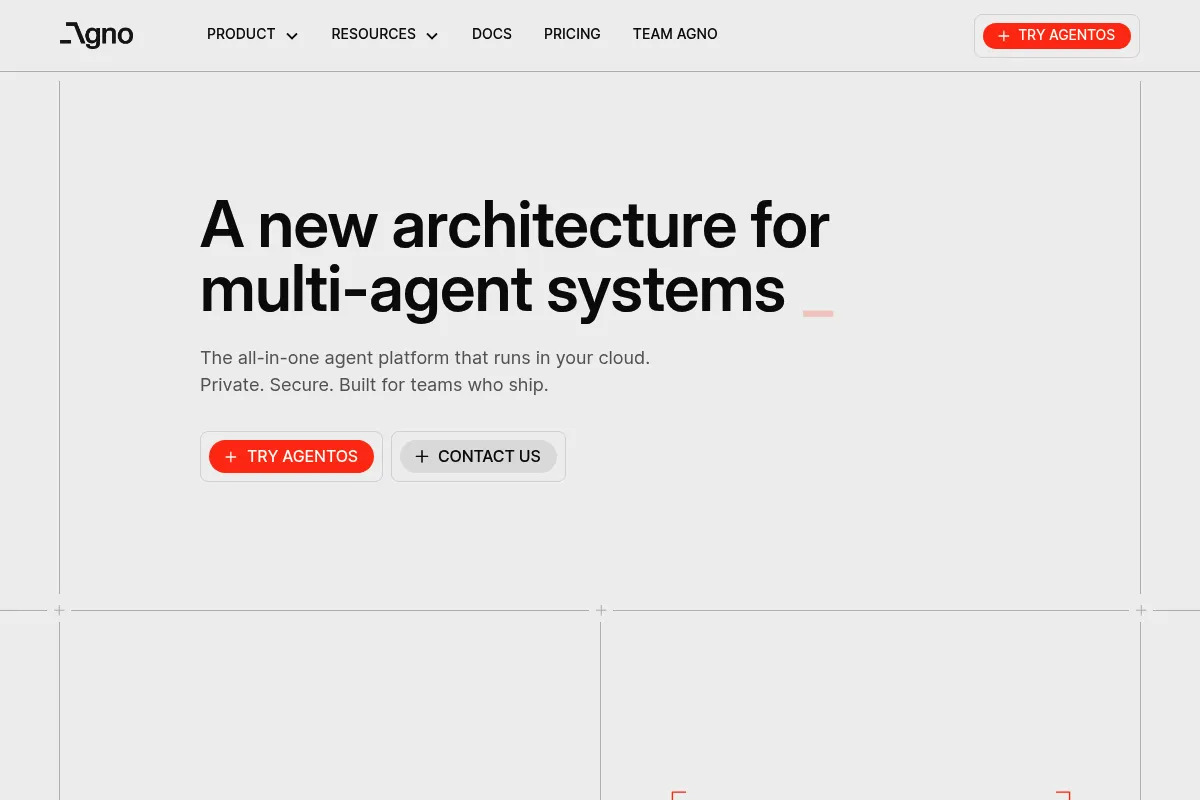
Phidata, which has rebranded to Agno, secured $5.4 million in a Series A funding round in late 2024. This initial capital provides a solid runway to develop its open-source framework for building AI agents and grow its team.
Market Signals & Traffic
Estimated visits, global rank, geography, traffic sources, monthly visit trends, and organic search keywords (Similarweb)—on a dedicated page built for depth and search.
- Estimated visits
- 17,431
- Global rank
- #1,370,565
- Snapshot
- Apr 2026
- Traffic trend
- Falling
Estimated monthly visits
Alternatives to Phidata
View all alternatives
Similar Tools
Mendix
Developer Tools, Automation & Agents, Workflow

Low-code platform for building and deploying enterprise applications.
Back4App
Developer Tools, Automation & Agents, Workflow

Backend-as-a-Service platform for building and scaling applications.
Wordware
Developer Tools, Automation & Agents, Workflow

IDE for building and deploying complex LLM applications
Julep
Developer Tools, Automation & Agents, Workflow

Development platform for building stateful agents with long-term memory.
Abacus.ai
Developer Tools, Automation & Agents, Workflow

Platform for building and deploying enterprise-scale machine learning models.
Duckie
Developer Tools, Automation & Agents, Workflow

Autonomous software engineer that resolves technical tickets and bugs.