

Predibase is a specialized developer platform for fine-tuning and serving open-source LLMs that uses a unique adapter-based architecture to run multiple custom models on a single GPU cluster.
Best for teams needing to deploy dozens of task-specific models cost-effectively, weaker for those requiring full-parameter fine-tuning or deep architectural model changes.
Analysis based on product data, pricing structure, traffic signals, and public user sentiment.
Who Should Use Predibase?
Typical users
ML engineers and backend developers at mid-sized startups or enterprises who need to move beyond generic prompting to specialized, private models.
Maturity fit
scaling
Choose this if…
- You need to serve many different fine-tuned models (e.g., one per customer) without paying for a dedicated GPU for each.
- Your team prefers a declarative 'config-driven' approach to training rather than writing raw PyTorch code.
- You want to transition from expensive OpenAI APIs to cheaper, high-performance open-source models like Llama 3 or Mistral.
Skip this if…
- You require full-parameter fine-tuning for deep domain adaptation where LoRA adapters are insufficient.
- You are looking for a simple wrapper for closed-source models like GPT-4.
- Your workflow is strictly limited to on-premise air-gapped environments without an enterprise-level budget.
About Predibase
Predibase is an integrated development platform designed to simplify the LLM lifecycle. Built by the creators of the Ludwig framework, it provides the infrastructure to train, manage, and deploy fine-tuned models using Low-Rank Adaptation (LoRA).
What it actually does
The platform allows developers to upload datasets, select a base open-source model, and run fine-tuning jobs on serverless GPUs. It then serves these models using a proprietary 'LoRA Exchange' (LoRAX) architecture that enables high-throughput inference for multiple adapters simultaneously.
What makes it different
Unlike standard inference providers that require a dedicated GPU instance for every fine-tuned model, Predibase's LoRAX technology allows hundreds of task-specific adapters to share a single base model deployment. This significantly reduces the 'cold start' problem and the total cost of ownership for multi-model applications.
Ratings across the web

Ratings aggregated from independent review platforms.
Key Features
LoRAX (LoRA Exchange)
Serves hundreds of specialized adapters on a single shared GPU pool to maximize utilization.
Declarative Fine-Tuning
Uses YAML-based configurations to define training parameters, making ML accessible to software engineers.
Serverless Training Infrastructure
Automatically provisions and scales GPU resources for training jobs without manual cluster management.
Dataset Management
Built-in versioning for training data to ensure reproducible model results.
SDK and CLI
Full programmatic access for integrating fine-tuning into existing CI/CD pipelines.
Unified Inference API
A single endpoint to query any fine-tuned adapter by simply passing an adapter ID.
Pricing
Developer
- Pay-as-you-go compute
- $25 free starting credit
- Shared serverless infrastructure
- Community support
- Access to all base models
Pro
- Everything in Developer
- Higher rate limits
- Priority support
- Advanced dataset connectors
- VPC deployment options
Enterprise
- Custom SLAs
- Dedicated GPU clusters
- SOC2 compliance
- Role-based access control (RBAC)
- White-glove onboarding
Pricing checked 4 months ago
Pricing guidance
- When you need to move from shared infrastructure to a VPC for security.
- When your inference volume exceeds the shared tier rate limits.
- When you require SOC2 compliance for enterprise customers.
- Shared infrastructure on the Developer tier may experience higher latency during peak times.
- Storage costs for large datasets and many model versions can add up over time.
Competitive pricing that positions itself as a cheaper alternative to both OpenAI and managing raw GPU instances on AWS/GCP.
Pros & Cons
Strengths
-
Drastic reduction in inference costs
By multiplexing adapters on shared GPUs, teams avoid the 'one model, one GPU' cost trap common in traditional deployment.
-
Fast iteration cycles
The serverless nature means you can start a training job in minutes without waiting for hardware procurement or K8s configuration.
-
High-quality base model support
Immediate access to the latest state-of-the-art open weights like Llama 3.1 ensures you aren't locked into outdated architectures.
Weaknesses
-
Limited to adapter-based tuning
While LoRA is efficient, some niche use cases still require full-parameter fine-tuning which is not the platform's primary focus.
Affects: Research-heavy teams or those with massive, highly unique datasets.
-
Platform dependency
While the underlying Ludwig framework is open source, the LoRAX orchestration and serverless scaling are proprietary to the Predibase platform.
Affects: Teams with strict requirements for 100% portable, vendor-neutral infrastructure.
-
Pricing complexity
Costs are split between subscription fees, training compute, and inference usage, which can be difficult to forecast during early experimentation.
Affects: Finance teams and managers at early-stage startups.
Real User Sentiment
Generally positive, with users praising the technical elegance of the LoRAX architecture and the ease of the declarative training interface.
Users tend to like
- The ability to serve multiple models on one GPU
- Ease of use for developers who aren't ML PhDs
- Fast deployment of new open-source models
- Clear documentation and SDK
Users commonly complain about
- Occasional UI bugs in the dataset management dashboard
- Lack of support for some very niche or brand-new model architectures
- Cost transparency for high-scale inference
Recurring tradeoffs
- Users trade deep architectural control for operational simplicity and cost savings.
Happiest users
Software engineers tasked with building AI features who don't want to manage Kubernetes or GPU drivers.
Often frustrated
ML researchers who want to tweak every single hyperparameter and layer of a model's architecture.
Use Cases
SaaS Multi-tenancy
Fine-tuning a unique model for every customer using their specific data without exploding GPU costs.
Structured Data Extraction
Specializing a small model (like Phi-3) to extract JSON from messy documents with high accuracy.
Customer Support Bots
Training models on internal documentation and past tickets to improve response relevance.
Content Moderation
Building task-specific classifiers that are faster and cheaper than using GPT-4.
Code Generation
Fine-tuning a model on a company's private codebase for better internal autocomplete.
Frequently Asked Questions
How does Predibase compare to Hugging Face?
Hugging Face is a broad ecosystem for hosting models and datasets. Predibase is a specialized MLOps platform focused specifically on the production lifecycle of fine-tuning and serving. While you can use Hugging Face models on Predibase, Predibase provides the specific 'LoRAX' infrastructure to serve them more efficiently at scale than Hugging Face Inference Endpoints.
Can I export my fine-tuned models?
Yes. Models trained on Predibase are standard LoRA adapters. You can download the weights and use them with any library that supports the PEFT (Parameter-Efficient Fine-Tuning) format, ensuring you aren't permanently locked into the platform.
What is the cost of fine-tuning a model?
Fine-tuning costs depend on the base model size and the dataset volume. On the Developer tier, you pay for the GPU time used during training. A typical fine-tuning run on a medium dataset with Llama 3 can cost between $5 and $50.
Does Predibase support private data?
Yes. Predibase offers VPC deployment and private cloud options on the Pro and Enterprise plans, allowing you to keep your data and models within your own security perimeter while still using their management layer.
What models can I fine-tune?
Predibase supports most popular open-source architectures, including Llama 3.1, Mistral, Mixtral, Phi-3, and Gemma. They typically add support for new major open-source releases within days.
Is there a free trial?
Predibase offers a Developer plan with $25 in free credits, which is sufficient to run several fine-tuning experiments and test the inference API without a credit card upfront.
Why trust this page?
This evaluation combines product positioning, pricing analysis, traffic and market signals, and public user sentiment into a single decision-support page. Content is generated editorially — not copied from the vendor's website.
Funding & Company
Founded
2021
Stage
Acquired
Total Raised
$28.45M
Latest Round
Series A (May 2023)
Notable Investors
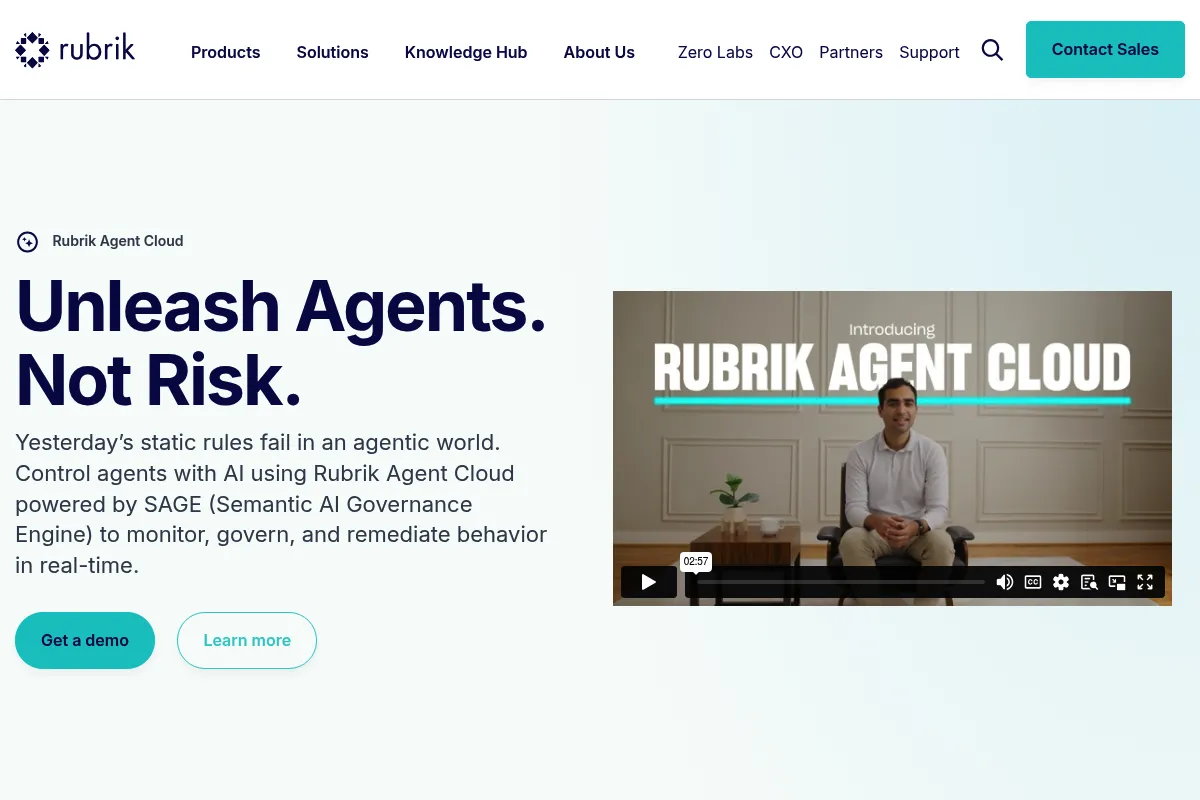
Predibase raised a total of $28.45 million across two Series A rounds before being acquired by Rubrik in June 2025. The funding, led by notable investors like Greylock and Felicis Ventures, supported the development of its low-code platform for custom AI models. The acquisition by a public company, Rubrik, provides significant financial stability and resources for future development.
Market Signals & Traffic
Estimated visits, global rank, geography, traffic sources, monthly visit trends, and organic search keywords (Similarweb)—on a dedicated page built for depth and search.
- Estimated visits
- 3,781
- Global rank
- #4,262,913
- Snapshot
- Apr 2026
- Traffic trend
- Falling
Estimated monthly visits
Alternatives to Predibase
View all alternativesAmazon CodeWhisperer
Developer Tools

AI-powered coding companion that generates code recommendations.
Hugging Face
Developer Tools, Productivity

Open-source platform for machine learning models, datasets, and tools.
Together AI
AI Assistant, Developer Tools, Productivity

AI Acceleration Cloud for building and deploying generative AI models.
Similar Tools
Wavespeed
Developer Tools

Serverless GPU infrastructure for high-speed AI model inference
Amazon CodeWhisperer
Developer Tools
AI-powered coding companion that generates code recommendations.
Positron
Developer Tools

Specialized hardware acceleration for high-efficiency transformer model inference.
Turso
Developer Tools

Distributed database platform based on libSQL for edge computing.
Nebius
Developer Tools

Cloud infrastructure for training and deploying machine learning models.
Modular
Developer Tools

Unified platform for high-performance AI development and deployment.